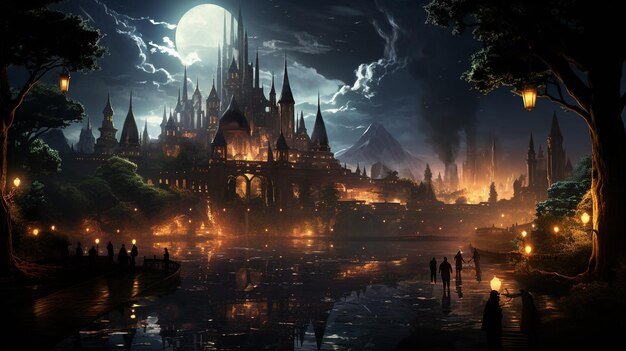
Have you ever yearned to step beyond the mundane, to journey through lands shaped by magic, lore, and imagination? To encounter ancient races, challenge dark forces, or simply find peace in a whimsical forest? For countless readers, the allure of Explorers of Fantasy Worlds and Mythical Realms isn't just a pastime; it's a fundamental human desire to discover the impossible, to push the boundaries of reality through the written word. These aren't mere stories; they are meticulously crafted universes waiting to be explored, rich with history, unique cultures, and untold wonders.
The best fantasy literature doesn't just entertain; it transports. It offers a passport to places where gravity can be manipulated by magic, where ancient prophecies guide kings, and where even the smallest creature can hold the key to a world's salvation. As seasoned literary guides, we're here to chart a course through some of the most captivating destinations that have defined the genre, helping you understand what makes these realms so irresistible and how to embark on your next grand adventure.
At a Glance: Your Guide to Uncharted Literary Territories
- The Core Appeal: Discover why fantasy worlds captivate us, offering escape, wonder, and deep human insights.
- Anatomy of a Realm: Understand the essential ingredients: diverse magic systems, intricate world-building, and fascinating creatures.
- Iconic Destinations: Tour legendary lands like Middle-earth, Roshar, Hogwarts, and the gritty First Law World.
- The Explorer's Purpose: Unpack the timeless themes of good vs. evil, identity, and cultural diversity that drive these narratives.
- Beyond the Book: See how these worlds offer profound reflections on our own realities and invite continued engagement.
- Charting Your Course: Practical tips for selecting your next epic journey and deepening your experience.
Why We Venture Beyond the Map: The Allure of Fantasy Exploration
There's a fundamental human impulse to explore, to push past the known horizon. In our increasingly mapped and cataloged world, fantasy literature offers a vital outlet for this primal urge, allowing us to be the trailblazers in worlds that exist only in the mind – and on the page. We delve into these imaginative landscapes not just for escapism, but for a deeper engagement with life itself. We want to witness heroism, grapple with moral quandaries, and experience wonder unconstrained by everyday physics.
Fantasy worlds provide a unique lens through which to examine profoundly human themes. Stripped of familiar settings and societal norms, the raw emotions of love, betrayal, power, and sacrifice stand out in stark relief. A magical quest can reveal more about perseverance than a real-world struggle, and a fictional kingdom's political intrigue can highlight the complexities of our own governments. It’s an immersive form of empathy, inviting us to walk in the shoes of elves, hobbits, or storm-blessed warriors, and emerge with a refreshed perspective on our own journey.
Passport to the Impossible: Defining Fantasy Worlds and Mythical Realms
What separates a mere story from a truly immersive fantasy realm? It's more than just sprinkling in a few dragons. It's about crafting an entire ecosystem, a believable (within its own rules) universe with its own history, physics, and heartbeat. These worlds are not just backdrops; they are characters in their own right, shaping the destinies of those who inhabit them.
The Fabric of Reality: Magic Systems
Magic is the lifeblood of most fantasy worlds, but its manifestation varies wildly. Sometimes, it’s a force of nature, untamed and mysterious; other times, it's a meticulously structured science with rules as rigid as physics.
- Structured Magic: Think of Brandon Sanderson's intricate systems, where magic has clear costs, limitations, and consistent effects. This approach allows for strategic use and prevents "deus ex machina" solutions, making the magic feel earned and logical. Characters might manipulate metals (Mistborn) or draw power from magical storms (Roshar), but they always operate within defined boundaries.
- Fluid and Mysterious Magic: In contrast, J.R.R. Tolkien's Middle-earth presents magic as an inherent part of the world, often subtle, ancient, and wielded by beings of immense power like Gandalf, whose full capabilities are never entirely explained. This creates a sense of wonder and awe, suggesting there are forces beyond human comprehension. Terry Pratchett's Discworld offers a satirical take, where magic is often absurd and reality itself is a pliable concept.
These diverse approaches to magic fundamentally shape the narrative and the explorer's experience, dictating what's possible, what's feared, and what defines power within the realm.
Building the Impossible: World-building as Art
World-building is the bedrock of fantasy. It’s the art of creating not just a setting, but a living, breathing entity with its own geography, politics, economics, and culture. Authors like Tolkien didn't just write stories; they meticulously crafted languages, genealogies, and millennia of history before ever penning "The Hobbit." George R.R. Martin's Westeros thrives on its complex political factions, detailed family histories, and the palpable weight of its past.
Effective world-building involves:
- Geography: From the misty mountains of Rivendell to the storm-swept plains of Roshar, landscapes are integral.
- Culture and History: Each race, kingdom, or city has its own traditions, folklore, and historical conflicts that influence present-day events.
- Governance and Economics: How do these societies function? Who holds power? What resources are valued? These details ground the fantastical in a semblance of reality, making the world feel tangible and lived-in.
When done well, world-building turns a book into a destination, inviting readers to delve deeper than the plot, to learn about its peoples, its myths, and its very soul.
Companions and Adversaries: Creatures and Races
Beyond human characters, fantasy worlds are teeming with an array of sentient (and sometimes non-sentient but equally impactful) creatures and races. Elves, dwarves, dragons, trolls, fairies, hobbits, giant crustaceans – these beings are more than just set dressing.
- Embodying Themes: Dragons might represent primal power or hidden wisdom. Elves often symbolize ancient wisdom, connection to nature, or ethereal beauty. Dwarves typically embody craftsmanship, resilience, and a deep connection to the earth.
- Driving Conflict and Adventure: These races often have long-standing rivalries, alliances, or unique societal structures that contribute to the story's central conflicts and drive characters on quests. Think of the complex relationships between the different races in Middle-earth or the unique Shardbearers of Roshar.
- Exploring Diversity: By creating new species and cultures, fantasy authors can explore themes of prejudice, cooperation, cultural exchange, and the meaning of "otherness" in ways that resonate deeply, even if presented through a fantastical veil.
These diverse inhabitants make a world feel vibrant and complex, offering unique perspectives and challenges to any explorer.
Journey Through Literary Landscapes: Iconic Fantasy Worlds Worth Exploring
From the cozy comfort of a hobbit hole to the perilous peaks of a dark lord's domain, fantasy literature offers an unparalleled array of destinations. Let's embark on a whistle-stop tour of some of the most celebrated realms, each a testament to imaginative world-building and narrative prowess.
Middle-earth: The Cradle of High Fantasy
J.R.R. Tolkien's Middle-earth isn't just a world; it's a foundational text for the entire genre. Introduced through The Hobbit and cemented by The Lord of the Rings, this legendary land is home to the ancient, wise elves; the stout, mining dwarves; the humble, resilient hobbits; and powerful, mysterious wizards. You can journey through the idyllic pastures of the Shire, marvel at the elven grace of Rivendell, or brave the desolate, corrupt lands of Mordor. Middle-earth set the standard for high fantasy, weaving deep lore, epic struggles between good and evil, and a profound sense of history into every stone and forest. It's a world where even the smallest individual can change the course of destiny, making it endlessly compelling for new and returning explorers.
Roshar: A Storm-Swept Tapestry of War and Wonder
Brandon Sanderson's Roshar, from The Stormlight Archive, is a realm defined by its unique environment: colossal, magical storms called Highstorms that sweep across the land. This relentless force has shaped everything, from the hardy flora and fauna (like giant crustacean-like creatures) to the very architecture, giving rise to fascinating floating cities. The world is also known for its elite warriors, the Knights Radiant, who wield Shardblades—magical, sentient swords—and Shardplate, powerful suits of armor. Roshar offers a richly detailed magical system, complex political intrigue, and a deeply emotional narrative of redemption and struggle, appealing to those who love intricate plots and unique ecological fantasy.
Hogwarts and the Unseen University: Where Magic Meets Academia
Magic isn't just for epic quests; it's also for education, as proven by these two iconic institutions. J.K. Rowling's Hogwarts, the famous magical school from Harry Potter, captured a generation's imagination with its moving staircases, enchanted feasts, secret chambers, and the eternal struggle between good and evil. It’s a place where childhood wonder meets the gravitas of destiny.
In stark contrast, Terry Pratchett's Unseen University in Ankh-Morpork, set within the sprawling, flat Discworld (which rests on the backs of four elephants, which in turn stand on a giant turtle), is a satirical take on magical academia. Here, reality often bends to the whims of its comically inept wizards, and the university is less about learning and more about bureaucratic bumbling and the consumption of fine food. Both offer unique explorations of magic within an academic setting, one inspiring awe and the other, outright laughter.
The All-World and First Law: Gritty Frontiers of Morality
For those who prefer their fantasy with a darker, more morally ambiguous edge, these worlds offer profound experiences. Stephen King's The All-World, the central setting for The Dark Tower series, is an eerie, sprawling blend of Wild West, medieval fantasy, and dystopian science fiction. It's a dying world, filled with haunted towns, ancient ruins, and a towering structure at its center that holds the fabric of all realities together. Exploring The All-World is a journey through desolation, mystery, and a pervasive sense of dread, perfect for readers who appreciate unique genre fusion.
Similarly, Joe Abercrombie's The First Law World is renowned for its gritty realism, brutal political intrigue, and compelling antiheroes. There are no clear-cut villains or heroes here, only deeply flawed individuals navigating a world ravaged by war and personal ambition. This world is morally complex, challenging readers to confront the ugliness of human nature and the difficult choices people make under pressure. It's an explorer's journey into the heart of darkness, compelling in its honesty.
Temerant & The Land: Lore, Music, and Game Mechanics
Some worlds invite exploration through their deep, hidden lore or unique rule sets. Patrick Rothfuss's Temerant, the setting of The Name of the Wind, is a land steeped in intricate history, mystical music, and a richly detailed magic system that feels both academic and dangerous. Its prestigious University is a hub of knowledge and intrigue, while the shadowy Chandrian represent an ancient, fearsome threat. Exploring Temerant is like peeling back layers of a grand mystery, each revelation more captivating than the last.
Meanwhile, Aleron Kong's The Land, from the Chaos Seeds series, offers a unique blend of RPG mechanics with reality. Here, characters level up, gain skills, and engage in kingdom building as if they were living within a video game. This novel approach to world-building provides a clear sense of progression and consequence, appealing to readers who enjoy systems-based fantasy and the thrill of strategic development.
The Night Court & Hundred Acre Wood: Beauty, Power, and Gentle Whimsy
The spectrum of fantasy exploration also includes worlds of breathtaking beauty and comforting simplicity. Sarah J. Maas's The Night Court, from A Court of Thorns and Roses, enchants with its starry skies, breathtaking mountains, and hidden magic. It intertwines elements of stunning beauty with potent power and political maneuvering, offering a sensual and romantic exploration for those who enjoy high stakes and lush descriptions.
At the other end of the spectrum is A.A. Milne's The Hundred Acre Wood, a whimsical, peaceful forest inhabited by Winnie-the-Pooh, Piglet, Tigger, and friends. This gentle realm invites exploration of childhood innocence, friendship, and simple joys. It’s a world where small adventures feel monumental and where wisdom is found in the quietest moments. It reminds us that exploration isn't always about epic battles, but sometimes about finding profound meaning in the everyday.
The Explorer's Mindset: What We Seek in These Realms
Why do these fantastical journeys resonate so deeply? Because the explorations within these worlds mirror our own inner quests. They allow us to grapple with universal questions and fundamental human experiences in a safe, imaginative space.
The Eternal Dance: Good Versus Evil (and the Gray Areas)
The timeless struggle between good and evil forms the foundation of countless fantasy narratives. Frodo's quest to destroy the One Ring, Harry Potter's battle against Voldemort, and Kvothe's pursuit of the Chandrian are all rooted in this archetypal conflict. Yet, modern fantasy often complicates this binary, introducing morally ambiguous characters and complex antagonists. The gritty pragmatism of characters in The First Law World, or the nuanced choices of those in Roshar, force us to question the nature of heroism and villainy, reminding us that reality is rarely black and white. This exploration of the ethical spectrum enriches our understanding of ourselves and society.
Who Am I? Journeys of Identity and Self-Discovery
Many protagonists in fantasy literature embark on profound journeys of self-discovery. Harry Potter learns to harness his power and confront his past, Frodo Baggins discovers an inner strength he never knew he possessed, and Arya Stark forges her identity through harsh trials and difficult decisions. These characters' struggles to understand their heritage, purpose, and potential resonate powerfully with readers navigating their own identities. In these imaginary worlds, identity is often linked to destiny, magic, or prophecy, making the personal journey feel profoundly epic.
Beyond the Familiar: Embracing Cultural Diversity
Fantasy literature excels at creating new races, societies, and traditions, allowing readers to engage with questions about identity, community, and belonging on a grand scale. The intricate cultures of elves, dwarves, or the various peoples of Roshar present unique perspectives on justice, honor, and social structure. This imaginative diversity encourages readers to consider different ways of living and thinking, often challenging preconceived notions and fostering a broader understanding of cultural relativism and the value of varied perspectives.
Beyond the Page: How World-Building Shapes Our Experience
The true genius of fantasy lies in its ability to transport readers into worlds so vivid and consistent that they feel real. This immersion isn't accidental; it's the direct result of painstaking world-building, where every detail, from the flora of a magical forest to the political history of an ancient empire, contributes to a cohesive and believable experience. For writers, it’s a demanding creative challenge. For readers, it’s a portal to endless adventure and profound insights into the human condition.
These elaborate constructions allow authors to explore deeply human themes from a removed, allegorical perspective. Tolkien, for instance, used the industrial blight of Saruman's Isengard to subtly comment on environmentalism, and the leadership of Aragorn to embody ideals of noble governance. George R.R. Martin's A Song of Ice and Fire (which inspires many explorations of the human condition and grand political intrigue) uses its cutthroat political landscape to dissect morality, power, and the consequences of war. By presenting these issues through a fantastical lens, readers can engage with complex topics without the immediate biases of real-world contexts, gaining fresh perspectives that might otherwise be overlooked.
The power of these worlds extends beyond the written word. Many beloved literary destinations have been brought to life on screen, allowing us to visualize the Shire, walk the halls of Hogwarts, or witness the epic battles of Middle-earth. If you're fascinated by how these incredible worlds are translated from book to film, you might enjoy exploring All about movie explorers, delving into the challenges and triumphs of adapting these intricate realms for a new visual medium. Such adaptations only deepen our connection to these places, making them feel even more tangible and accessible.
Gear Up for Your Next Adventure: Choosing Your Fantasy Realm
With so many incredible worlds to explore, how do you choose your next literary destination? Think of yourself as an experienced adventurer planning your next expedition. What kind of experience are you truly craving?
- For the Epic Quest Seeker: If you love grand narratives, clear stakes of good vs. evil, and intricate mythologies, begin with foundational high fantasy like Tolkien's Middle-earth or Brandon Sanderson's Roshar. These worlds offer vast landscapes, ancient evils, and heroic journeys.
- For the Intellectually Curious: If you're drawn to complex magic systems, political intrigue, and deep lore, consider Temerant or the detailed societies within Roshar. These are worlds that reward careful attention and offer layers of discovery.
- For the Humor and Satire Enthusiast: If you prefer your magic served with a side of wit and absurdity, Terry Pratchett's Discworld (and specifically the Unseen University) is your ideal destination.
- For the Gritty and Realistic: If you prefer morally gray characters, harsh realities, and a less magical, more human-centric conflict, Joe Abercrombie's The First Law World or Stephen King's The All-World will provide a challenging, but rewarding, journey.
- For the Comforting and Whimsical: If you're looking for gentler adventures, rich friendships, and a sense of enduring charm, the Hundred Acre Wood or other cozy fantasy realms await.
- For the Romantic and Powerful: For worlds blending beauty, dangerous magic, and passionate relationships, explore realms like The Night Court.
Ask yourself: Do I want to be enchanted by wonder, challenged by moral dilemmas, or simply comforted by friendship? Your answer will guide you to the perfect portal.
Common Misconceptions About Exploring Fantasy Worlds
Even with their widespread popularity, fantasy realms sometimes face unwarranted scrutiny. Let's clear up a few common misconceptions:
- "Fantasy is just for kids." This is a long-outdated stereotype. While some fantasy is certainly suitable for younger readers (like Harry Potter or Winnie-the-Pooh), much of it—especially modern works like The First Law or The Stormlight Archive—grapples with adult themes of war, politics, morality, and complex human relationships. The genre offers profound insights relevant to all ages.
- "It's all dragons and elves; it lacks originality." While classic archetypes endure, the genre continually evolves. Authors like Brandon Sanderson invent unique magic systems and biomes, while Terry Pratchett satirizes every fantasy trope imaginable. The breadth of fantasy is vast, encompassing everything from historical fantasy to urban fantasy, grimdark to cozy fantasy, each with its own innovative take on the fantastic.
- "Fantasy is just escapism, not 'real' literature." While it undeniably offers escape, fantasy often explores human themes—love, betrayal, power, sacrifice, identity, and environmentalism—with a depth and complexity that rivals any literary fiction. By removing stories from immediate reality, fantasy can often discuss difficult truths more effectively, allowing readers to engage with societal issues from a fresh, less biased perspective. The immersion itself is a rich experience, not a shallow one.
- "It's too hard to get into; too much lore." While some series do have extensive lore, many have accessible entry points. Starting with a standalone novel or the first book in a completed trilogy can be less daunting. Authors also employ various techniques to introduce lore gradually, ensuring readers aren't overwhelmed. Often, the joy of discovery is part of the exploration.
Charting Your Course: Dive Deeper into Fantastic Literature
Exploring fantasy worlds and mythical realms is an enriching journey that extends far beyond merely reading a book. It's an invitation to engage with boundless imagination, to confront fundamental human questions, and to find profound meaning in the most extraordinary of settings. Whether you prefer the epic scope of high fantasy, the gritty reality of grimdark, or the gentle charm of whimsical tales, there is a literary destination perfectly suited to your spirit of adventure.
So, equip yourself with curiosity, open a book, and take that first step. Discuss your favorite realms with fellow explorers, delve into online communities dedicated to world-building, or even try your hand at creating your own fantastical map. The portals are always open, and the next breathtaking literary destination awaits your discovery. Happy exploring!