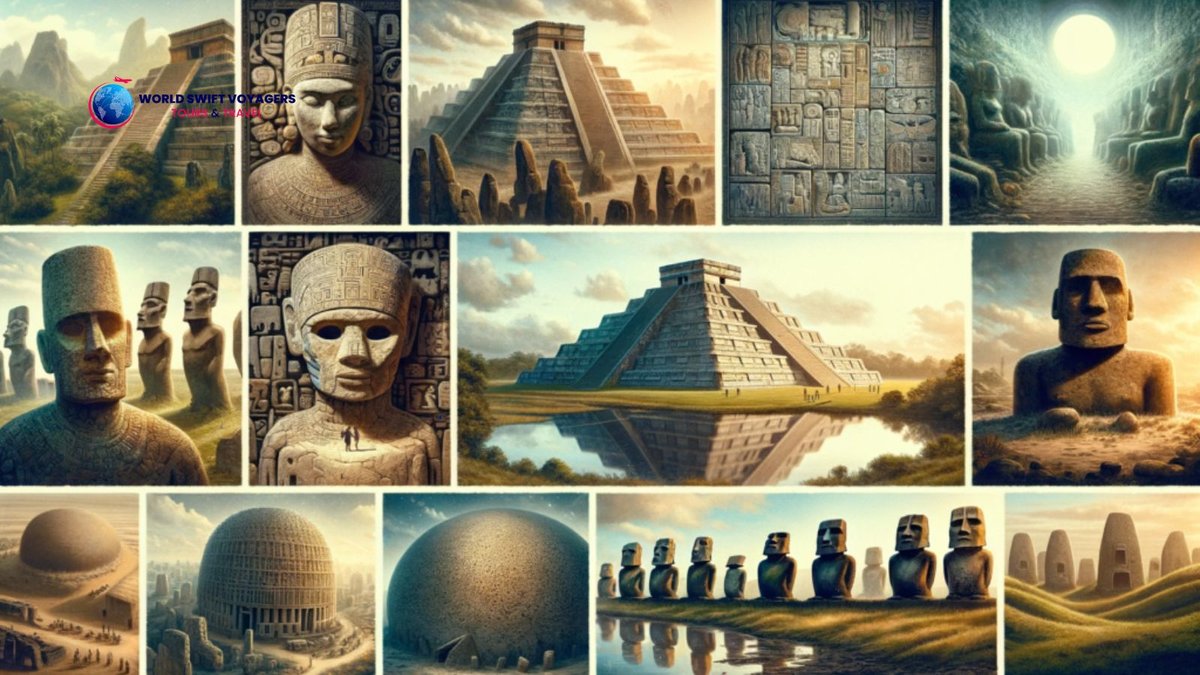
Beneath our feet, beyond the reach of our immediate gaze, lie countless stories etched in stone, sand, and the silent depths of the sea. Explorers of Ancient Ruins and Lost Civilizations aren't just uncovering old bricks; they're peeling back layers of time, rewriting history, and challenging everything we thought we knew about humanity's past. Imagine a world where 90% of history's vibrant cultures remain hidden, waiting for a whisper from a LiDAR scan or a shadow on a satellite image. That's the reality archaeologists face today, and it's yielding breathtaking results.
At a Glance: What We're Uncovering
- Vast Unknown: Over 90% of ancient civilizations are still undiscovered, promising endless revelations.
- High-Tech Tools: LiDAR and satellite imagery are revolutionizing how we find lost cities and empires.
- Rewriting History: New finds challenge timelines and reveal the incredible diversity and innovation of past cultures.
- From Sea to Sand: Discoveries span sunken cities like Helike and Thonis-Heracleion to desert marvels like Petra.
- Enigmas Persist: The Great Pyramid's sound theories and the mystery of Crystal Skulls continue to fascinate.
- Beyond Stereotypes: Reclaiming the contributions of powerful women like Queen Hatshepsut and the multifaceted roles of groups like the Roman Legions.
- A Living History: Archaeology is a continuous, collaborative effort, constantly evolving our understanding of who we are.
The Whispering Earth: Why Ancient Ruins Keep Calling
For centuries, the idea of "lost civilizations" has fueled our imaginations. From Atlantis to El Dorado, these myths speak to a universal human curiosity: what came before us? Who were these people? How did they live, build, and eventually disappear? What secrets did they master?
Today, this ancient fascination meets cutting-edge technology. We're not just digging blindly anymore. Advanced techniques like LiDAR (Light Detection and Ranging) scanning can pierce through dense jungle canopies, revealing the ghostly outlines of forgotten cities. Satellite imagery helps identify subtle changes in landscape that hint at buried structures, while ground-penetrating radar maps what lies beneath. These tools are bringing countless vibrant, once-overlooked cultures from Africa to Asia and Europe to light, offering fascinating insights into human history's diversity, innovation, resilience, and cultural richness. They're challenging current understandings of the past and constantly rewriting historical timelines.
Modern Indiana Jones: The Tools Reshaping Discovery
Forget the dusty fedora and bullwhip (mostly). Today's explorers of ancient ruins are as likely to wield a drone as a trowel. This blend of traditional archaeological rigor and technological prowess is accelerating discoveries at an unprecedented rate.
Imagine flying over an impenetrable rainforest. What appears as an endless green carpet to the naked eye can, through LiDAR, transform into a detailed topographical map revealing plazas, roadways, and pyramidal structures hidden for millennia. This isn't just theory; it's how researchers are pinpointing vast, complex urban centers that defy previous estimates of ancient populations and capabilities. These innovations allow archaeologists to cover vast areas quickly, identify promising sites with incredible precision, and even create 3D models of ruins before a single shovel breaks ground. It's a game-changer, transforming painstaking manual exploration into a highly efficient, data-driven quest.
Echoes from the Deep and Dust: Major Rediscoveries Changing Our Story
Every year brings new revelations, but some discoveries stand out as pivotal moments in our understanding of the past. These sites don't just add names to a list; they reshape entire chapters of human history.
Submerged Wonders: Cities Swallowed by the Sea
The ocean is a vast, cold archive, holding secrets for millennia. The rediscovery of submerged cities reminds us of nature's power and the resilience of human ingenuity.
- Helike (Ancient Greek City): Imagine a bustling port, a jewel of the Achaean League, suddenly consumed by a tsunami and earthquake in 373 BC. For centuries, Helike was a legend, a cautionary tale. Then, in the late 20th century, its ruins were uncovered beneath meters of silt and water off the coast of Greece. The discovery of an advanced society, frozen in time, offered invaluable insights into classical Greek architecture and daily life before its watery demise. It's a poignant reminder of nature's dominion over even the most sophisticated human endeavors.
- Thonis-Heracleion (Egyptian Port City): Another marvel snatched by the sea, Thonis-Heracleion was a vital hub of commerce and culture, linking Egypt with the Greco-Roman world. Submerged for over a thousand years, it was rediscovered in 2000 in Abu Qir Bay near Alexandria. Divers brought up intricate artifacts, colossal statues, and countless coins, revealing a vibrant city where Egyptian and Greek cultures intertwined. Its ruins showcase the sheer scale of ancient trade and the sophisticated infrastructure that supported it, proving just how interconnected ancient civilizations truly were.
Desert Secrets: Stone Cities and Enigmatic Structures
Deserts, far from being barren, often guard the best-preserved remnants of civilizations built to withstand the elements.
- Petra (Nabatean City): Carved into rose-red cliffs in modern-day Jordan, Petra was the capital of the Nabatean kingdom, a powerful trade empire. Lost to the Western world for over a thousand years, it was "rediscovered" in 1812 by Swiss explorer Johann Ludwig Burckhardt. Petra's intricate facades, sophisticated water management systems, and strategic location demonstrate an incredible mastery of desert survival and trade. Its rediscovery captivated the imagination, revealing a civilization that thrived by harnessing its challenging environment.
- Dalitu (Southeast Asia): The mysterious ruins of Dalitu, with structures resembling pyramids and even "flying saucers," hint at an advanced engineering capability and a potential role as a significant ceremonial or trade hub in Southeast Asia. While details are still emerging, such enigmatic sites challenge conventional architectural models and spark debates about the extent of ancient knowledge and technology. They compel us to reconsider what was possible in the distant past.
Urban Giants & Trade Hubs: Redefining Ancient Powerhouses
From sprawling riverine cultures to mighty nomadic empires, these rediscovered sites expand our understanding of global human development and interaction.
- Indus Valley Civilization (India): Before its rediscovery, the narrative of early urban development largely centered on Mesopotamia and Egypt. The vast Indus Valley Civilization, with cities like Mohenjo-Daro and Harappa, challenged that, showcasing a sophisticated urban culture with advanced sanitation, grid-like city planning, and a mysterious undeciphered script, flourishing roughly from 2500 to 1900 BC. Its rediscovery has rewritten the timeline of early urban development, placing it among the world's first great civilizations.
- Aksum (Ethiopia): Once a dominant trading power linking the Nile and Red Sea, the Kingdom of Aksum, associated with the Queen of Sheba and the Ark of the Covenant, flourished for centuries before its decline over a thousand years ago. Excavations reveal monumental stelae, elaborate tombs, and evidence of a vast trade network stretching from the Mediterranean to India. Its decline, likely due to shifts in trade routes and environmental changes, underscores the complex interplay of factors that shaped ancient empires.
- Kingdom of Kush (South of Egypt): Often overshadowed by its Egyptian neighbor, the Kingdom of Kush, centered in what is now Sudan, was a formidable power. It played a pivotal role in reviving pyramid construction (building more pyramids than Egypt itself!) and significantly influenced Egyptian culture, even ruling Egypt as the 25th Dynasty. Its rediscovery showcases a rich, independent African civilization that deserves its own prominent place in history.
- Tuwana (Modern-Day Turkey): A vital trade hub connecting East and West, Tuwana's rediscovery reveals sophisticated urban planning that challenges conventional architectural models. Its strategic location meant it was a melting pot of cultures, and its ruins offer critical insights into ancient Anatolian economic and social structures, demonstrating a level of organizational complexity not always attributed to regional powers of its time.
- Xiongnu Empire: A powerful nomadic confederation that challenged the Han Dynasty in ancient China, the Xiongnu were known for their horsemanship and military prowess. While often depicted as barbarians by their sedentary neighbors, rediscovered burial sites reveal their sophisticated craftsmanship, rich artistic traditions, and extensive cultural exchange with diverse peoples. These findings force us to re-evaluate historical narratives that often demonized nomadic groups, showing them as complex, influential societies.
Legend Made Real: The Power of Narrative
Sometimes, archaeology doesn't just discover new places; it confirms old tales, breathing life into ancient myths.
- Troy: For centuries, Homer's epic tales of the Trojan War were considered just that—tales. Then, in the late 19th century, Heinrich Schliemann's excavations in modern-day Turkey began to uncover the multi-layered city of Troy, proving that Homer’s stories, while perhaps embellished, were rooted in real events. This discovery was a landmark, blurring the lines between myth and history and sparking a global fascination with archaeological pursuits.
- Great Wall of China (Hidden Sections): The iconic Great Wall is far more extensive and complex than once thought. Recent expeditions, utilizing modern mapping techniques, have rediscovered numerous hidden sections, revealing its true colossal scale and the incredible resilience and innovation of the dynasties who built and maintained it. These sections often tell stories of different building materials, repair efforts, and strategic adaptations over millennia, enriching the narrative of one of humanity's most ambitious construction projects.
Cultural Crossroads: Where Worlds Met
Some sites tell stories not just of a single people, but of profound cultural fusion and exchange.
- Greco-Bactria (Central Asia): A Hellenistic kingdom forged in the wake of Alexander the Great's conquests, Greco-Bactria was a cultural melting pot influenced by Greek successors and nomadic tribes like the Yuezhi. Excavations across Central Asia reveal a stunning fusion of Greek and Eastern traditions in art, architecture, and coinage. This kingdom, thriving for over a century, stands as a testament to the enduring legacy of Hellenistic culture far from the Mediterranean and its dynamic interaction with Asian civilizations. It offers a window into a world where East and West met and mingled with profound results. If you're fascinated by how different cultures shaped each other, you might enjoy exploring All about movie explorers and how their fictional journeys often reflect real-world cultural encounters.
Unraveling Enigmas: Mysteries and Theories that Intrigue Us
Not all discoveries offer clear answers. Some artifacts and structures continue to baffle and inspire theories that push the boundaries of conventional thinking.
The Great Pyramid's Hidden Rhythms
The Great Pyramid of Giza is an architectural marvel whose construction still sparks debate. Beyond its sheer scale, some fascinating theories suggest its design might have created soundwaves capable of inducing altered states of consciousness. The King’s Chamber, in particular, is proposed to act as a resonator, its precise dimensions and granite composition amplifying specific frequencies. While purely theoretical at this stage, such ideas invite us to consider not just the physical function of ancient structures, but their potential spiritual or psychological roles within their societies.
Crystal Skulls: Artistry or Anomaly?
Perhaps one of the most enigmatic artifacts in archaeological circles are the Crystal Skulls. Their origins remain a thousand-year-old mystery, debated between ancient craftsmanship and modern forgeries, with conflicting evidence. Some claim they possess mystical properties or represent an advanced lost technology, while scientific analysis often points to more recent production dates. Regardless of their true age, these skulls continue to spark fierce debate and highlight the challenges of authenticating artifacts when provenance is unclear, reminding us that not every shiny object from the past is what it seems.
Beyond Battles: Diverse Contributions to History
History isn't just about kings, conquests, and powerful men. Rediscoveries are increasingly highlighting the vital, often overlooked, contributions of diverse individuals and groups.
The Power of Queens: Hatshepsut's Legacy
Ancient Egypt, with its long line of pharaohs, provides a unique lens through which to view leadership. Queen Hatshepsut, a female pharaoh whose reign (c. 1479–1458 BC) was marked by unprecedented prosperity, extensive trade expansion, and monumental building projects (including her magnificent mortuary temple at Deir el-Bahari), is a prime example. Her rule demonstrates that ancient Egypt valued leadership based on capability rather than strictly gender, allowing women to wield significant influence and power—a concept far ahead of many societies that followed. Her story challenges simplistic narratives about gender roles in antiquity.
Architects of Empire: The Enduring Roman Legions
The image of a Roman legionnaire often conjures up battlefields and military might. Yet, the "last Roman legion" exemplifies perseverance and adaptability far beyond combat. These soldiers were not just warriors; they acted as skilled builders, engineers, and administrators, establishing roads, bridges, and cities across a vast empire. Their ability to adapt to diverse circumstances, from constructing fortifications in hostile territories to managing civilian populations, laid the groundwork for many aspects of modern military strategies and civil engineering. Their legacy extends far beyond military history, profoundly influencing the very infrastructure of Western civilization.
The Collaborative Quest: How History Keeps Evolving
What makes archaeology so thrilling today is that history is not a static text; it's a living, evolving narrative. Ongoing research continues to uncover hidden cities and forgotten empires at an astonishing pace, driven by an increasingly collaborative spirit. Archaeologists, historians, scientists (from geologists to remote sensing specialists), and even local communities are working together more than ever before. This interdisciplinary approach leverages diverse expertise, ensuring that discoveries are not only made but also understood within their broader context, offering the most comprehensive picture possible. Every new artifact, every newly mapped structure, chips away at the unknown, continually reshaping our understanding of the human story.
Why These Hidden Histories Matter for Tomorrow
The modern "ancient explorers" are driven by more than just curiosity. They aim to uncover the secrets of past civilizations, including sunken cities, forbidden technology (or advanced ancient engineering mistaken for it), and architectural wonders, believing these secrets hold answers to humanity’s greatest questions. Where did we come from? What are our true capabilities? What is our destiny?
By studying the rise and fall of these societies—their innovations, their resilience in the face of environmental change, their cultural richness, and their eventual declines—we gain invaluable perspectives. We learn about sustainable practices from those who mastered desert living, about trade and diplomacy from vast empires, and about urban planning from cities centuries ahead of their time. The quest isn't just about looking backward; it's about harnessing forgotten wisdom for a better future, understanding the patterns of human civilization to inform the challenges we face today.
Your Role in the Story: Supporting Discovery
The excitement of uncovering ancient ruins and lost civilizations isn't limited to a select few. Every article you read, every documentary you watch, every conversation you have about these discoveries helps foster a greater appreciation for our shared human heritage. You can support this ongoing quest by engaging with reputable archaeological organizations, advocating for the protection of cultural heritage sites, and simply by staying curious. The past is not merely prologue; it is a profound teacher, and its lessons are still being unearthed, one breathtaking discovery at a time.